Dental Implants vs. Bridges: A Practical Decision Guide
If you are missing a tooth and comparing your options, you are not alone. Many patients researching dental implants in Linden are also wondering whether a traditional bridge might be simpler, faster, or more affordable. The truth is that both treatments can work well, but for different reasons.
In our previous blog, "Are Same-Day Dental Implants Good? | Linden | Colonia," we discussed how immediate options can reduce overall treatment time for certain patients. In this article, we focus on the decision-making side: implants vs. bridges, and how to choose based on your mouth, your lifestyle, and your long-term priorities.
TL;DR - Choosing Between an Implant and a Bridge in Linden, Colonia, and Clark
When deciding between a dental implant and a bridge, the best choice is the one that protects your oral health while fitting your timeline and budget.
- Implants replace the root and can help preserve jawbone and protect nearby teeth.
- Bridges can restore your smile without surgery, but they usually rely on neighboring teeth for support.
- Cleaning is often simpler with an implant, while bridges typically require special tools to clean underneath.
- Cost matters, but so does cost-over-time (repairs, replacements, and hygiene maintenance).
- Bring a short list of questions to your consult so your plan is based on your mouth, not a generic rule.
First, What Is Each Option?
Dental Implant (Implant + Abutment + Crown)
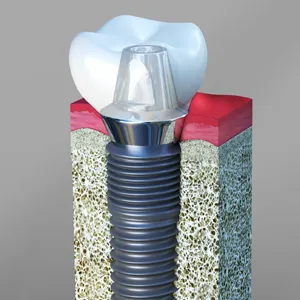
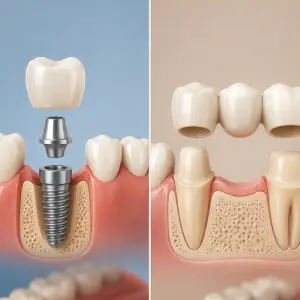
A dental implant replaces a missing tooth from the root up. A small post sits in the jawbone, and once healed, it supports a custom crown. If you are exploring dental implants in Linden, this is typically the option people mean when they say "a permanent tooth replacement."
Dental Bridge (Often a 3-Unit Bridge)
A traditional bridge replaces the missing tooth by attaching a false tooth (pontic) between two crowns. Those crowns are placed on the teeth next to the gap. A bridge can be a strong fixed option, especially when the adjacent teeth already need crowns.
Dental Implants vs. Bridges: The Decision Framework That Matters
1) Longevity and "Cost Over Time"
Patients often start with sticker price, but a better comparison is total value over time. A bridge may cost less initially, but it can require replacement if the supporting teeth or the bridge itself wears, chips, or develops decay around the margins.
Implants may have a higher upfront investment, but because they stand independently, they can reduce the chance that you will need to treat the neighboring teeth just to support the replacement.
2) Jawbone Support and Facial Changes
When a tooth is missing, the jawbone in that area no longer gets the same stimulation it received from chewing forces through the natural root. Over time, that bone can shrink. An implant is unique because it replaces the root and helps transmit functional forces back into the bone.
A bridge restores the visible tooth and chewing surface, but it does not replace the root, so it does not provide that same bone stimulation in the missing-tooth area.
3) Impact on Nearby Teeth
This is a key reason many patients choose implants. A traditional bridge typically requires shaping the two neighboring teeth for crowns. Even if those teeth are healthy, they usually need to be prepared to create space for the crown material.
With an implant, the replacement is supported by the implant itself, so the adjacent teeth are not usually reduced just to place the restoration.
4) Hygiene and Daily Maintenance
In day-to-day life, a single implant crown is often cleaned similarly to a natural tooth: brush and floss around it. A bridge is also brushable, but the area underneath the false tooth can trap plaque and food, so most patients need tools such as floss threaders, bridge floss, or a water flosser to keep the tissue healthy.
5) Treatment Time, Convenience, and "How Many Appointments?"
Bridges can sometimes be completed faster because they do not require the same healing period as an implant. Implants often involve a healing phase so the implant can integrate with the bone.
That said, some patients in the area searching for dental implants near you in Linden are surprised that the surgical appointment itself is typically short. In our experience, the bigger variable is not the appointment length, it is whether your bone and gum health support predictable healing.
Who Usually Prefers an Implant? Who Usually Prefers a Bridge?
People Who Often Lean Toward Dental Implants
- Patients who want to avoid reshaping the neighboring teeth when possible
- Those prioritizing bone support in the missing-tooth area
- Patients who want a tooth replacement that feels most like a natural, standalone tooth
- People looking for a long-term solution (and are comfortable with a healing phase)
People Who Often Lean Toward a Bridge
- Patients who prefer a non-surgical tooth replacement approach
- Those who need a faster fixed solution for an upcoming event (depending on clinical findings)
- Patients whose adjacent teeth already need crowns, making a bridge more logical
- Patients who may not be ideal implant candidates without additional procedures
Dental Implants in Linden: What to Ask in Your Consultation
The best consults are the ones where you leave knowing why a recommendation fits your mouth. If you are weighing dental implants vs. bridges for Linden, Colonia, or Clark, consider bringing these questions:
- Are the teeth next to the gap healthy, or do they already need crowns?
- How will each option affect cleaning and gum health in my case?
- Do you see any bone changes already, and would an implant help stabilize the area?
- What is the expected maintenance plan (cleanings, home tools, checkups)?
- If something fails, what is the backup plan and what might that cost over time?
If you would like to learn more about how implant care fits into a bigger oral health plan, our oral surgery services page explains related procedures that may sometimes be part of complex tooth replacement planning.
FAQs
Is a dental bridge or a dental implant better for one missing tooth?
It depends on your goals and the health of nearby teeth. Implants replace the tooth root and can help preserve jawbone, while bridges use neighboring teeth for support and can be a good option when those teeth already need crowns.
Do bridges damage the teeth next to the missing tooth?
A traditional bridge usually requires shaping the adjacent teeth to hold crowns, which can remove healthy enamel. In some cases those teeth already have large fillings or damage and crowning them is reasonable. A dental exam is needed to confirm the best approach.
How long do dental implants last compared to bridges?
Both can last for years with good care. Bridges may need replacement over time due to wear or changes in the supporting teeth, while implants are designed to be a long-term solution when the implant integrates well and gum health is maintained.
Are dental implants harder to clean than a bridge?
Most people find implants straightforward to clean like a natural tooth (brushing and flossing). Bridges often require special floss threaders or other tools to clean under the bridge where food and plaque can collect.
If I want dental implants near you in Linden, what should I bring to the consultation?
Bring a list of medications, relevant medical history, and any questions about timing, comfort, and maintenance. The dentist will evaluate your bone and gum health and discuss whether implants, a bridge, or another option best matches your needs.
Related Reading
- All-On-Four and dental implants
- Same-day dental implants (Linden and Colonia)
- Post-op instructions
- Meet the dentist
Bottom Line: Choose the Option That Protects the Teeth You Still Have
Bridges and implants can both restore confidence and chewing function. The difference is how they get their support: bridges borrow strength from neighboring teeth, while implants stand on their own and can support the bone beneath the missing tooth.
A personalized exam is the only way to know what makes the most sense for your smile. Dr. Richard Jr. Lukenda and our team help patients from Linden, Colonia, and Clark compare tooth replacement options with clear pros and cons, not sales pressure.
Schedule a Tooth Replacement Consultation
If you are deciding between a bridge and dental implants, call our office at 732-428-4080 to schedule a consultation and get a plan tailored to your mouth and your goals.